Professional Responsibility
Professional responsibility is an instructors’ active participation in professional development as an educator. Attending conferences, reflecting on teaching choices, and open-mindedly listening to observation feedback are a few ways instructors evaluate their practices to facilitate their professional learning.
The first time I stepped into a language classroom as a teacher, I had no teaching experience. That first year of constant trial-and-error teaching made me realize that my undergraduate linguistics degree did not provide the teaching fundamentals I needed to be a truly successful language educator. I decided to take professional responsibility for my teaching and enrolled in a CELTA course. This was a critical step in my professional development—it gave me the tools I needed to better manage my classroom.
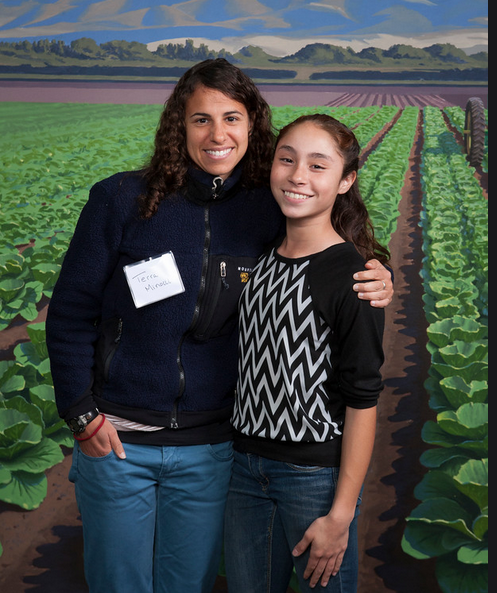
I enrolled at the Middlebury Institute of International Studies (MIIS) to further develop my instructional abilities. I have since become an active participant in volunteering, attending conferences, discussions and reflecting on my teaching practices. In March 2015, I volunteered as a Steinbeck writing coach for young authors in Monterey county. With no previous experience teaching or tutoring writing, this excellent opportunity connected me to the local community and provided the grounds for my personal development as a writing tutor. Additionally, attending professor Eileen Glissan’s discussion on Helping Students Reach Advanced-level Proficiency helped me better understand how to differentiate amongst proficiency levels and challenge students to advance linguistically.
To be a part of a dynamic community, I joined the TESOL association so I could keep myself up-to-date with research and attend webinars. I was particularly intrigued with webinars as a mode to educate myself outside the confines of an educational institution or university. Upon graduating, my TESOL membership will be an essential resource for obtaining current, valid teaching information. In April 2015 I attended Randee Falk and Colin Ward’s TESOL webinar presentation on Teaching Modals Across the Levels. I voluntarily enrolled in this webinar because in past teaching experiences, I have found teaching the concept difficult, and wanted to learn innovative methods for the process.
Reflecting on teaching events is another key tool for professional development. I have completed several reflection journals through the course of my teaching career that have helped me analyze my teaching strengths and weaknesses. In addition to these journals, I believe it is important for observers to provide teachers with written and oral feedback. The written feedback I received from my practicum professor, CELTA instructors, and peers contained rich information and ideas that I plan to experiment with and utilize in my future teaching endeavors.